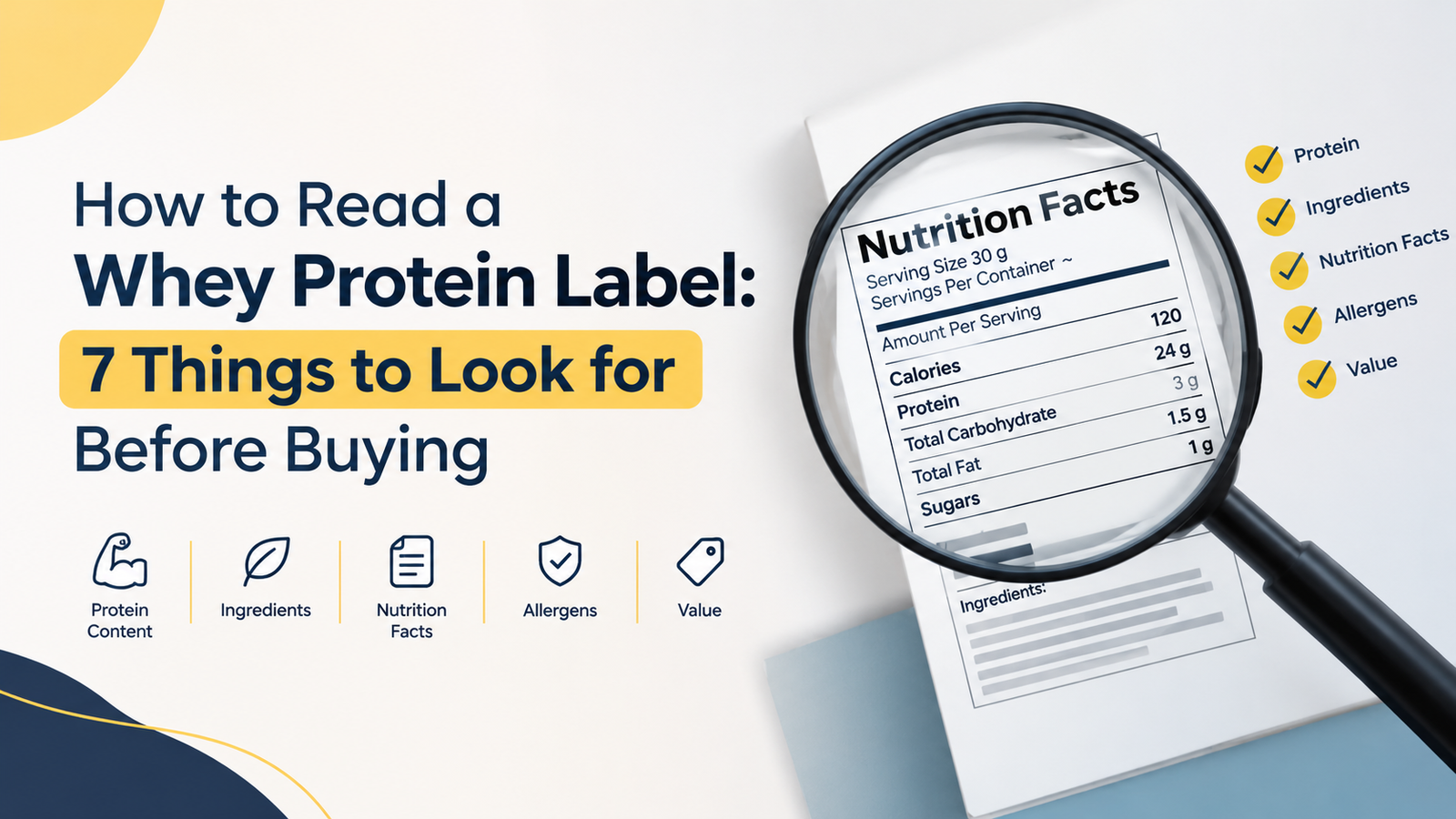
How to Read a Whey Protein Label: 7 Things to look for

Choosing a whey protein powder can feel confusing, especially when every brand promises great results. Some products highlight protein content, while others focus on ingredients, flavours, or special claims. So, how do you know what you are actually buying?
The answer starts with the label.
Learning how to read a whey protein label helps you compare products and understand what each serving offers. It also helps you avoid common buying mistakes. Whether you are new to supplements or have used them for years, a quick label check can make your decision easier.
If you are considering MUSCELBOND Gold Whey, use these seven checks to understand its nutritional profile and decide whether it suits your needs.
1. Check the Protein Content Per Serving
Protein content is one of the first things to check on a whey protein label. However, do not judge a product by its headline claims alone.
Look for the amount of protein in one serving. Then check the serving size listed on the pack.
For example, MUSCELBOND Gold Whey provides 26g of protein per serving, according to its product label. This figure helps you understand how much protein you get from one scoop.
Also, compare protein content with the total serving weight. A larger scoop does not always provide more protein. The remaining weight may come from carbohydrates, fats, flavouring, and other ingredients.
What to check:
- Protein per serving
- Serving size in grams
- Number of servings per container
- Protein content compared with total serving weight
These details give you a clearer picture of what you are paying for.
2. Read the Ingredients List Carefully
The ingredients list tells you what goes into your protein powder. It can also help you understand the type of whey used in the product.
Whey protein concentrate and whey protein isolate are two common forms. Concentrate usually retains more lactose and fat. Isolate generally undergoes further processing to increase its protein concentration.
Some products combine different forms of whey. MUSCELBOND Gold Whey lists whey protein isolate, whey peptides, and whey protein concentrate in its protein blend.
You should also check the other ingredients. These may include flavouring agents, stabilisers, sweeteners, and added vitamins.
Do not assume that a longer ingredients list automatically means a poor product. Instead, understand the purpose of each ingredient and check whether the formula suits your preferences.
What to check:
- Type of whey protein
- Other ingredients in the blend
- Added flavouring and sweeteners
- Ingredients you may need to avoid
A quick review of the ingredients list can help you make a more informed choice.
3. Understand the Nutrition Facts
The nutrition panel shows more than just protein. It also lists calories, carbohydrates, sugars, fats, and other nutrients.
These values matter because your overall diet influences your fitness progress. A protein powder should fit into your daily nutrition rather than replace a balanced diet.
When checking MUSCELBOND Gold Whey, review the nutrition information for its stated serving size. Its Cafe Mocha product label lists 26g of protein per 40g serving.
Pay attention to these details:
- Calories: Check how much energy each serving provides.
- Carbohydrates: Review the total amount, especially if you track your daily intake.
- Sugars: Check both total sugars and added sugars.
- Fat: Look at the total and saturated fat content.
- Serving size: Make sure you compare similar quantities across products.
Always compare the same serving size when evaluating two protein powders. This makes the differences easier to understand.
4. Check the Sugar Content
Sugar content is another detail worth checking before you buy whey protein.
Some products contain added sugar to improve their taste. Others use alternative sweeteners or rely on flavouring ingredients. The right option depends on your preferences and nutritional needs.
MUSCELBOND Gold Whey lists zero added sugar on its product information. However, remember that zero added sugar does not necessarily mean zero total sugar.
Milk-based ingredients can contribute naturally occurring sugars, including lactose. Check the nutrition panel to understand the total sugar content of your chosen flavour.
Do not rely on the front of the container alone. Read the complete nutrition information before making a decision.
5. Look for Allergen Information
Allergen information is especially important if you have a food allergy or sensitivity.
Whey protein comes from milk, so people with a milk protein allergy should avoid it unless a qualified healthcare professional advises otherwise. People with lactose intolerance may tolerate some whey products better than others, but individual responses vary.
MUSCELBOND Gold Whey includes a milk allergen declaration on its product label.
Before buying any supplement, check the allergen statement and read the ingredients list. Also, look for warnings about possible cross-contact with other allergens.
If you have a diagnosed food allergy, do not rely on marketing claims alone. Confirm the product’s suitability before consuming it.
6. Check the Product’s Quality and Transparency
A good supplement label should provide clear information about the product. Look for the manufacturer’s details, batch information, expiry date, and applicable food safety or regulatory information.
In India, you can check for the relevant FSSAI licence details on packaged food products. You should also review the manufacturer’s website for additional product information.
Third-party testing or credible quality certifications can offer extra reassurance when available. However, do not assume a product has independent certification unless the brand provides evidence.
When considering MUSCELBOND Gold Whey, review the available product details and packaging information. Check that the product comes from a reliable seller and that the seal and expiry date are intact.
Before purchasing, check:
- Manufacturer and contact details
- Batch number and expiry date
- Applicable licence information
- Available testing or quality documentation
- Packaging condition and seller reliability
These checks help you evaluate the product beyond its advertising claims.
7. Compare the Price With the Protein You Get
A low price does not always mean better value. The real comparison is how much protein you receive for the money you spend.
Start by checking the pack size and number of servings. Then calculate the cost per serving.
For a more useful comparison, calculate the cost per gram of protein.
Use this simple formula:
Cost per gram of protein = Total product price ÷ Total grams of protein in the pack
For example, if a pack costs ₹2,000 and provides 5,000g of protein in total, the cost works out to ₹0.40 per gram of protein.
This is only an example, not a quoted price or nutritional claim for MUSCELBOND Gold Whey.
When comparing products, use the same method for each one. Also consider ingredients, quality information, taste preferences, and how well the product fits your diet.
The cheapest option may not always be the best fit for you.
Bonus Tip: Avoid These Common Buying Mistakes
Even experienced gym-goers can overlook important label details. Keep these common mistakes in mind when choosing whey protein.
Focusing only on protein claims: Check the serving size and complete nutrition panel.
Ignoring the ingredients list: Understand which type of whey the product contains.
Confusing total sugar with added sugar: Read both values before comparing products.
Trusting every marketing claim: Look for supporting information instead of relying on slogans.
Comparing prices without checking servings: Calculate the cost per gram of protein for a fair comparison.
A few minutes spent reading the label can help you avoid unnecessary confusion
Frequently Asked Questions
1. How do I read a whey protein label?
Start with the serving size and protein content. Then check the ingredients, calories, carbohydrates, sugar, fats, and allergen information. Review quality details and compare the price with the amount of protein provided.
2. How much protein should one serving of whey contain?
The amount varies by product. Many whey powders provide around 20–30g of protein per serving. Check the label and consider your total daily protein needs.
3. What is the difference between whey concentrate and whey isolate?
Whey concentrate generally contains more lactose and fat. Whey isolate undergoes additional processing and usually has a higher protein concentration. The best option depends on your dietary needs and tolerance.
4. Is whey protein with zero added sugar sugar-free?
Not necessarily. Zero added sugar means the manufacturer has not added sugar as an ingredient under the applicable labelling rules. Naturally occurring sugars may still be present. Always check total sugars on the nutrition panel.
5. Is MUSCELBOND Gold Whey suitable for beginners?
Beginners can consider whey protein if they need help meeting their daily protein requirements. Review the ingredients and nutritional information first. Your overall diet and fitness goals should guide your choice.
6. Should I check the ingredients before buying whey protein?
Yes. The ingredients list identifies the type of whey, flavouring agents, sweeteners, and other components. It also helps you identify ingredients that may not suit your dietary needs.
7. How can I compare two whey protein powders?
Compare protein per serving, serving size, ingredients, calories, sugar, allergen information, and available quality documentation. Calculate the cost per gram of protein for a fair price comparison.
8. Is whey protein necessary for muscle growth?
No. You can meet your protein needs through food alone. Whey protein offers a convenient option when your regular diet does not provide enough protein. Resistance training, overall nutrition, and recovery also support muscle growth.
How to Read a Whey Protein Label: 7 Things to Look for Before Buy