How to Build Muscle Faster: The Role of Protein, Training and Recovery

Building muscle can oftentimes be seen as a more complex process than it actually needs to be. There is always a new exercise programme or supplement that promises to get you to your bigger muscle goal faster. But when you boil it down, there are always a few principles that lead to muscle growth – training, protein and recovery.
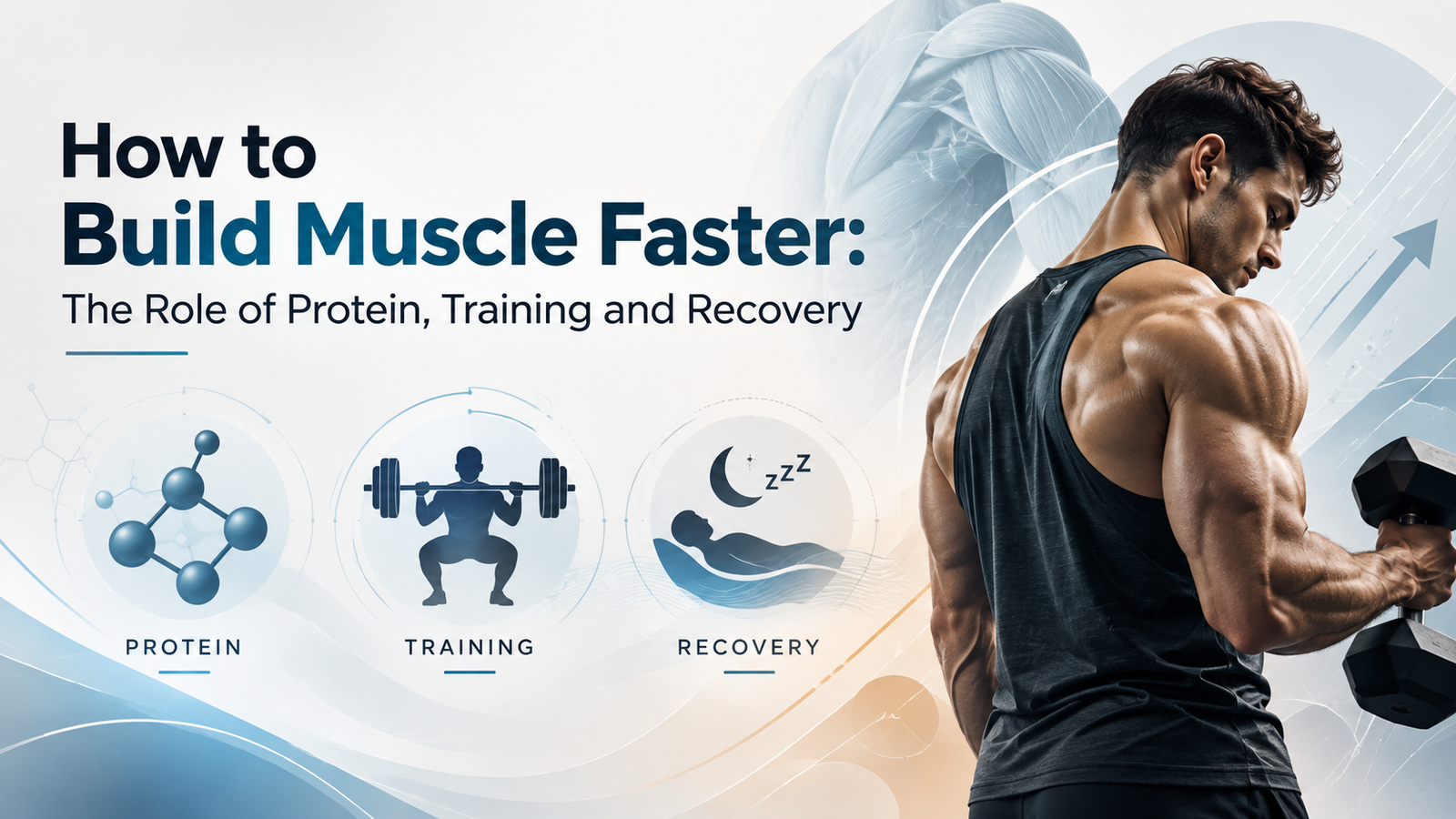
Training provides your muscles with a stimulus for adaptation. Protein provides your body with the amino acids that it needs to repair and build muscle tissue. And recovery provides your body with the time and environment to respond to the stimulus of training. Understanding the role of these three pillars of muscle building can make a big difference to the journey of gaining muscle.
What Does It Take to Build Muscle?
Muscle hypertrophy (growth), refers to the increase in size of your muscle tissue. This happens as a response to the stress your muscles experience during resistance training exercises.
By placing a stimulus (resistance exercise) on your muscles, you trigger your body to repair and adapt to this stress, which leads to increases in muscle size and strength. With the right stimulus, nutrition and recovery time, you can begin to see hypertrophy.
Building muscle typically consists of:
Resistance training
Consuming adequate amounts of protein
Eating a healthy and balanced diet
Overcoming plateaus (progressive overload)
Getting proper recovery (sleep/adequate rest)
Recovery and consistency
There is no magic bullet for muscle gain, there are however a number of key components that play a role. The combination of all these things work together to stimulate your body to grow muscle.
The Role of Protein in Muscle Growth
Protein is one of the most important macronutrients for anyone hoping to build muscle. It is the building block (amino acids) for many of the bodys processes, including muscle repair and growth.
Resistance training increases the demand for amino acids to repair muscles, and this is why adequate protein intake plays a large role in building muscle.
Protein can be consumed from a variety of foods, such as eggs, dairy, fish, meat, soy, legumes and more.
For those struggling to reach their daily protein requirements, protein supplements can provide the extra boost they need to reach their targets.
How Much Protein Do You Need?
Protein requirements vary from person to person, depending on things like body weight, training programmes, fitness goals and more. As a rule of thumb, people doing regular resistance training should aim for between 1.4- 2 grams of protein per kilogram of body weight per day.
Spreading out your protein intake throughout the day will make it easier to consume enough to meet your requirements.
Training: Give Your Muscles a Reason to Grow
Nutrition aside, resistance training provides the stimulus for muscle growth that your body needs.
Strength training exercises place the required stimulus on the muscles that you want to grow. Think about bodyweight exercises such as squats, rows, presses, pull-ups, lunges and deadlifts, and how they can form part of a balanced programme.
The concept of progressive overload plays a big role here. Simply put, progressive overload is a continual increase in demands on the body during exercise to keep challenging the muscles and stimulate growth.
This can be achieved by adding weight, volume (more reps or sets), varying exercise difficulty, or improving form. You dont need to continuously add weight or increase the number of sets, a small increase can make a world of a difference.
Why Recovery Is Just as Important
The idea of working out harder and more frequently to get bigger muscles sounds logical. After all, the more you put your body through, the more it should respond, right?
Well, unfortunately it works the other way around. Your recovery time is just as important as the hard work you put in at the gym. It gives your body the time it needs to adapt to the strain you put on it during exercise.
Without sufficient recovery time, you leave yourself open to underperformance and fatigue during your training sessions.
Dont Underestimate Sleep
Sleep plays a huge role in physical recovery and overall wellness. Getting enough good quality sleep on a regular basis can set you up for optimal performance during your training sessions.
Instead of sacrificing your sleep to get in an extra workout, think of sleep as part of your training plan.
Rest Days Are Part of the Process
Rest days are arguably as important as training days. The amount of rest you need depends on your level of intensity, how frequently you train, fitness level and personal preference. Rest days give your overworked muscles the time they need to fully recuperate so you can show up for your next training session ready to go.
How Protein, Training and Recovery Work Together
Think of muscle building as a triad with three legs: training, protein (and nutrition) and recovery. Each leg is important and if one leg is neglected, you end up with a wobbly muscle-building journey.
Having a fantastic training programme in place wont matter if you neglect your nutrition and recovery. Similarly, having the most incredible diet and supplement plan wont aid your muscle-building journey if you have no resistance training programme in place.
The point is, consistency matters more than having the perfect programme, diet or supplement plan. If you can create healthy, sustainable habits that you can stick to for months, even years, you will see results.
Common Muscle-Building Mistakes
Changing Your Workout Too Frequently
The biggest mistake you can make when it comes to building muscle is constantly switching programmes. It is important to give your programme enough time to take effect and track your progress rather than jumping from one to the next.
Focusing Only on Protein
Protein is a vital component of a muscle-building journey, but it is only one leg of the triad. Training, overall nutrition, sleep and recovery all contribute to hypertrophy.
Ignoring Progressive Overload
Progressive overload ensures that you constantly expose your muscles to new challenges so that they continue to grow. If your programme gets boring and repetitive, it is probably time to introduce some progressive overload.
Not Eating Enough
Building muscle requires nutrient-dense foods. Consuming too few calories can make it harder for you to achieve your muscle-building goals.
Neglecting Recovery
Working out all the time without giving your body enough time to recover can leave you fatigued and in pain. Recovery time is essential to give your muscles the time they need to heal and strengthen.
Supplements can be a helpful addition to your muscle-building journey. They serve as a complement to a healthy and balanced diet and a good training programme. For example, protein powder can be incredibly useful if you struggle to reach your daily protein goals. Remember that supplements should enhance your diet, not replace it.
FAQs About Building Muscle
1. How long does it take to build muscle?
Muscle growth is a time-consuming process and the speed at which you put on muscle varies from person to person.
How long it takes you to build muscle largely depends on:
Your experience with training
- Genetics
- Nutrition
- Recovery
- Consistency with your programme
All of these factors are important to consider when calculating how fast you can expect to gain muscle. On average, most people see noticeable changes after anywhere between 6-12 months of consistent training.
2. How much protein should I eat to build muscle?
People who engage in regular resistance training generally consume approximately 1.4-2 grams of protein per day for every kilogram of body weight. Individual requirements vary based on a variety of factors, including diet, fitness goals and more.
3. Can I build muscle without protein supplements?
Yes, protein supplements are not necessary for building muscle. You can build admirable muscles without protein supplements. Supplements only make life a little bit easier when it comes to hitting your daily protein requirements.
4. Do I need to work out every day to build muscle?
No, working out every day is not required to build muscle. Muscle building requires training and recovery, and having a balanced programme that allows your muscles to recuperate is more important than working out every day.
5. Is protein more important than training for muscle growth?
No, both training and protein (and nutrition) play an important role in building muscle. Training provides the stimulus that your muscles need to grow. Protein provides your muscles with the amino acids that it needs to support and facilitate growth.
6. Does sleep affect muscle growth?
Yes, good quality sleep plays a crucial role in muscle growth and recovery. It is part of the muscles overall recovery process. Good quality sleep also improves your energy levels and performance during training.
7. What is progressive overload?
Progressive overload refers to the process of continually placing greater demands on your muscles in order to stimulate growth and adaptation. You can do this by gradually increasing the intensity of your workouts.
8. Can beginners build muscle quickly?
Yes, beginners can often see rapid gains when starting resistance training, especially when following a sound nutrition and recovery plan. However, the amount of muscle a beginner can put on varies from person to person.
9. Should I take protein before or after a workout?
The most important thing is to make sure you consume enough protein during the day. Protein intake around your workouts can make it easier to consume enough for the day, and while it is good to get protein post-workout, you dont need to obsess over a specific window directly after your workout.
10. What is the most important thing for building muscle?
There is no secret to muscle building – it revolves around a few core principles. Resistance training, good nutrition (with enough protein) and recovery are the three most important things when it comes to building muscle