Why Sleep Matters For Muscle Growth?

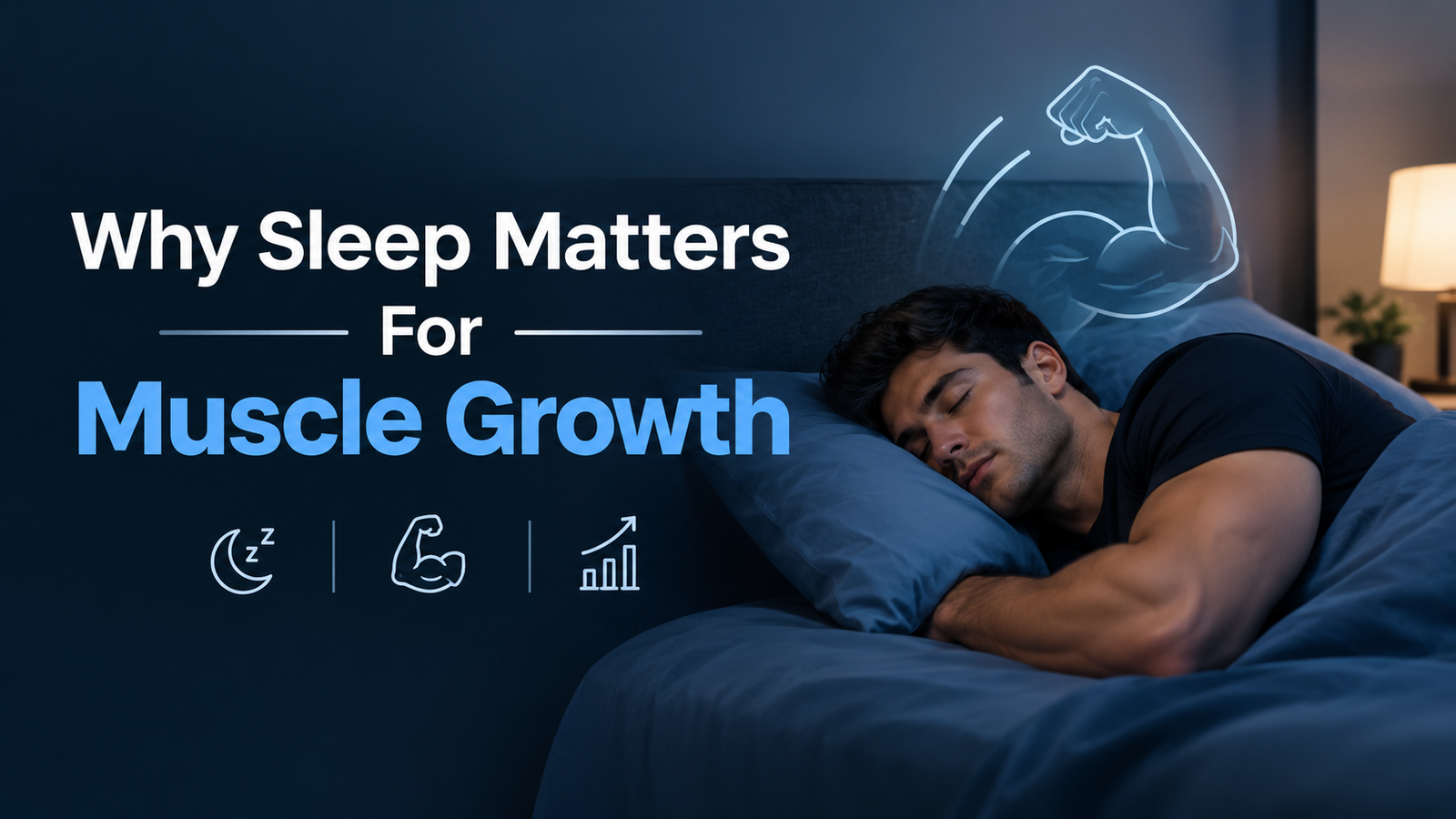
The conversations usually occur when you’re focusing on building muscle, at the expense of your sleep
While diet and exercise routines matter, missing out of sleep can have serious consequences on your recovery, rendering you unable to train with quality in the long run
But how, exactly, does sleep impact muscle gain, and how much do you need?
Let’s go over the science.
What Happens To Your Muscles While You Sleep?
Resistance training provides the stimulus for your muscles to grow.
However, the workout itself isn’t the driver of muscle gain, it’s the recovery from that training
Recovery occurs when your body repairs damaged tissues and adapts to the stress of the exercise in order to improve your future performance.
Sleep provides a vital opportunity for that to occur
During the night, your body continues to carry out recovery processes which allows it to repair damaged tissues, synthesize proteins, and more.
Having enough high-quality sleep means giving your body the time it needs to engage in these processes instead of running on empty
This is why sleep has to be seen as an essential component of your gains instead of something that you can leave out and make up for later.
Now let’s talk more about the link between sleep and muscle recovery.
The Link Between Sleep And Muscle Recovery
Every workout, however light, put a strain on your body.
The more intense and frequent your training is, the more recovery you’ll need
Sleep ensures that your body is able to recover from that strain effectively.
Throughout a good night’s sleep, your body cycles through different stages of sleep, each of which play a role in helping the body recover.
Deep sleep, in particular, has been linked to improved tissue repair and recovery.
Inadequate or poor-quality sleep can have a significant impact on the body as it’ll be constantly starved of sleep and unable to effectively engage in recovery.
You may experience fatigue and a lack of energy in your day-to-day life, have a harder time focusing, or struggle to meet your training demands.
Ultimately, chronic lack of sleep can impact your ability to recover between workouts, limiting your ability to train and increasing the risk of injuries.
Now, how does it tie into muscle gain, exactly?
Does Sleep Affect Muscle Growth?
Sleep doesn’t directly contribute to muscle growth, but it’s an essential component of muscular recovery.
Muscle growth itself is a multi-step process that requires a number of key factors to occur:
Resistance training provides the stimulus and damages the muscle tissue, while protein provides amino acids for tissue repair and muscular synthesis.
In addition, your diet provides you with energy and essential nutrients, and sleep/recovery gives your body the opportunity to engage in all of the aforementioned processes.
Each step of the way has its own importance, and putting an excessive amount of effort into one while ignoring the others can considerably hurt your progress.
Now let’s explore how poor sleep can impact your performance at the gym.
How Does Poor Sleep Affect Gym Performance?
One night of poor sleep won’t derail your progress, but a pattern of sleep deprivation can considerably impact your entire routine.
Poor sleep can affect your motivation and performance, increasing the risk of sub-optimal workouts.
You may feel more fatigued and less energized during your training sessions, reducing the effectiveness of your workouts.
Poor sleep can also increase your risk of injuries and impair your ability to recover between workouts.
You’d be surprised how much your muscles can ache and feel sore for no apparent reason when you’re sleep-deprived.
Even though you may have the physical capacity to workout, sleeping poorly can seriously undermine your efforts at the gym.
The same goes for feeling overly tired or unfocused during your workouts.
This is why recovery isn’t just about taking breaks between sets, but also about getting sufficient sleep and managing your overall state of being.
How Much Sleep Do You Need To Gain Muscle?
Unfortunately, there’s no universal recommendation on how much sleep you need to gain muscle.
As a general guide, most adults should be shooting for around 7-9 hours of sleep per day.
If you’re training frequently, getting enough sleep will ensure that you hit the gym with enough energy and let your body recover properly.
Quality is just as important as quantity, but even with good hours of sleep, poor sleep quality and frequent interruptions can considerably impact your recovery.
Now that we’ve determined the general requirements, let’s talk about the effects of chronic poor sleep.
What Are The Consequences Of Chronic Poor Sleep?
Sporadic insufficient sleep is normal, tests, work, vacations, social events, and even a stressful day can prevent you from sleeping through the night.
The problem occurs when lack of sleep becomes chronic and turns into a bad habit.
Without enough sleep, your performance, health, and even your motivation can be considerably impacted.
Poor sleep makes it harder to get proper workouts in, or to stay motivated to workout consistently.
Similarly, it can derail your nutrition and supplement routine and impact your ability to gain muscle.
If you’ve been consistently getting insufficient sleep, adding an extra set to your workout isn’t going to necessarily help, your body needs more time to recover between sets.
Now, let’s explore the connection between sleep and protein.
Protein And Sleep: How Do They Work Together?
Protein and sleep are both integral to the muscle-building process, but each play a different role.
Protein provides amino acids which your body utilizes for various cellular functions, including muscle protein synthesis.
Resistance training, in turn, damages your muscle tissue and puts additional strain on your body, increasing your requirement for protein.
On the other hand, sleep allows your body to engage in recovery processes.
As such, protein and sleep have to be consumed and utilized as two separate resources.
This is why a protein shake isn’t going to make up for hours and hours of lost sleep.
Similarly, good sleep hygiene can’t compensate for poor nutrition.
If you’re serious about building muscle, you need to ensure that you’re training, eating, and sleeping properly.
Now, let’s talk about how your muscle-building goals can be hindered by excessive sleep.
Does Sleeping More Help You Gain Muscle?
More hours of sleep aren’t necessarily a good thing, as long as you’re getting sufficient and good quality of sleep.
Sleeping longer than necessary can interfere with your circadian rhythm and negatively impact your health.
Aiming for a good number of hours of decent sleep is a much healthier option.
Another point worth considering is that the time you spend asleep isn’t as important as the quality and consistency of your sleep.
To improve your sleep, let’s review some helpful practices.
7 Ways To Improve Your Sleep And Recovery Habits
If you’re struggling to improve your current sleep patterns, there’s no need to try and implement all at once. Here are few useful suggestions that you can incorporate today to improve your recovery:
1. Maintain A Consistent Sleep Schedule
Going to bed and waking up at approximately the same time every day helps your body to establish a healthy circadian rhythm.
2. Maintain A Bedtime Routine
Dedicating yourself a few minutes before bed to unwind and relax can greatly improve your sleep quality.
You can read a book, stretch, or do anything that lets you relax and transition into sleep mode.
Avoid working or studying before bed as much as possible.
3. Reduce Your Exposure To Screens
Staring at a lit screen keeps your brain active and prevents it from relaxing. Ideally, you should give yourself a break from screens an hour or two before bed.
4. Limit Caffeine Intake
Caffeine has a long-lasting effect on your body, so it’s best to avoid consuming it late in the day.
If you’ve been having trouble sleeping, you may want to explore if caffeine has a negative effect on your sleep.
5. Make Your Bedroom Sleep-Friendly
Make sure that your bedroom is conducive to good sleep, meaning that it’s dark, quiet, and comfortable.
The temperature is also very important, as it can considerably impact your comfort throughout the night.
6. Don’t Skip Your Recovery Days
Recovery is just as important as any other type of training, so don’t skip it just because you’re eager to jump back into the gym.
7. Prioritize Sleep Like You Prioritize Your Training
If you’re willing to meticulously plan your meals and workouts, you should spend the same amount of time and effort devoted to your sleep.
Now that we’ve laid out some helpful suggestions, let’s explore some of the most common myths about sleep and muscle gain.
Sleep And Muscle Gain: The Most Common Myths Debunked
The following are some of the most common myths about the relationship between sleep and muscle gain:
Myth 1: You Only Need To Sleep When You Feel Sore
You should prioritize good sleep hygiene regardless of how you feel or how sore you are.
As long as you’re training consistently, you should dedicate time to your recovery.
Myth 2: Training Harder Can Make Up For Lack Of Sleep
If you’re sleep-deprived, extra sets and reps won’t make up for it.
Without enough sleep, your body has a harder time recovering between sets and workouts.
Myth 3: Protein Can Make Up For Poor Sleep
Protein and sleep play drastically different roles in the muscle-building process, so one cannot substitute for the other.
Myth 4: One Night Of Poor Sleep Can Derail Your Progress
One night of insufficient sleep won’t wreck your progress, but chronic lack of sleep can considerably impact your muscle-building ability.
Now that we’ve gone over the most popular myths, let’s do a summary.
FAQs
Does sleeping 8 hours help gain muscle?
Earning around 7-9 hours of good sleep can considerably help your muscle recovery, which is essential for gaining muscle.
Can lack of sleep halt muscle growth?
Chronic lack of sleep can considerably impact your muscle growth, but it won’t halt it completely.
Is 6 hours of sleep enough to gain muscle?
For most people, 6 hours of sleep isn’t sufficient, which is why most adults should aim for around 7-9 hours of sleep per day.
Should you sleep more after a hard workout?
A hard workout can increase your need for sleep, but instead of focusing on getting extra hours of sleep, you should aim to prioritize a good night’s rest.
Is a nap beneficial for muscle recovery?
Naps can be beneficial in reducing feelings of fatigue, but they can’t substitute healthy nighttime sleep.
Does sleep affect muscle recovery?
Sleep plays a big role in the muscle recovery process, so poor sleep hygiene can considerably impact your ability to recover between sets and workouts.